 🍲 Main Course Recipes
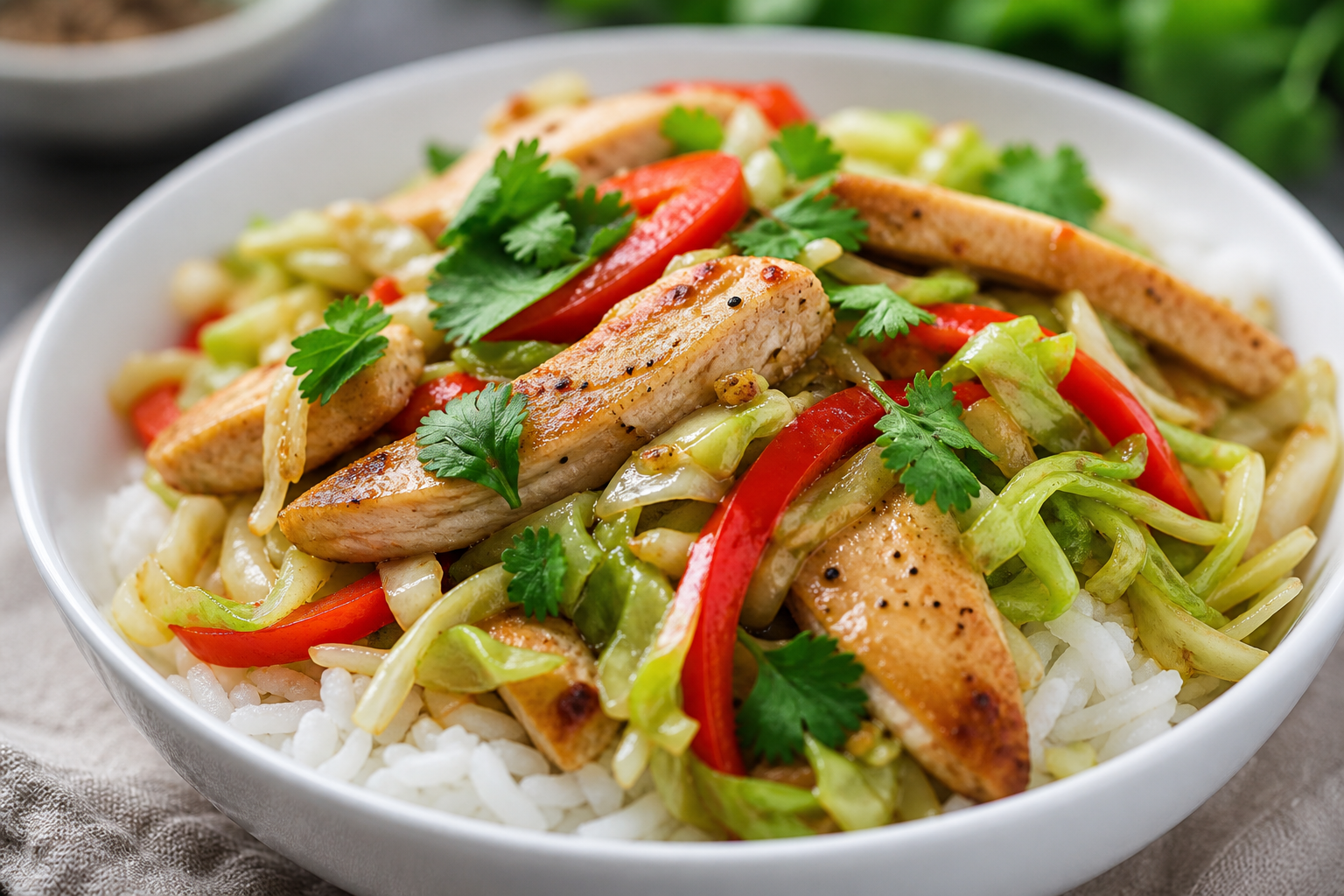
Kidney-Friendly Herb Chicken & Cabbage Stir-Fry
A low-sodium, low-potassium stir-fry with lean chicken, cabbage, and bell pepper — big on flavour, easy on your kidneys.
A kidney-friendly stir-fry built around low-potassium cabbage and peppers, lean chicken, and fresh herbs instead of salt — big on flavour, easy on your kidneys.
Why This Recipe Works for Kidney Health
People protecting their kidneys are usually watching sodium, potassium, and phosphorus intake. This stir-fry leans on cabbage, bell pepper, and onion — all lower-potassium vegetables — and swaps salt for ginger, garlic, and black pepper so the dish stays vibrant without straining the kidneys.
Ingredients
- 2 boneless, skinless chicken breasts, thinly sliced
- 2 cups shredded green cabbage
- 1 red bell pepper, sliced
- 1/2 cup thinly sliced onion
- 2 cloves garlic, minced
- 1 tablespoon fresh ginger, grated
- 2 tablespoons olive oil
- 1 tablespoon rice vinegar or fresh lemon juice
- Fresh cilantro and cracked black pepper, to taste
- 1 cup cooked white rice, for serving
Step-by-Step Instructions
- Heat olive oil in a large skillet or wok over medium-high heat.
- Add the chicken and cook for 4–5 minutes, stirring, until lightly golden and cooked through. Remove and set aside.
- Add the onion, garlic, and ginger to the same pan and sauté for 1 minute until fragrant.
- Add the cabbage and bell pepper and stir-fry for 4–5 minutes until just tender-crisp.
- Return the chicken to the pan, add the rice vinegar or lemon juice, and toss everything together for 1–2 minutes.
- Season with black pepper and fresh cilantro. Serve warm over white rice.
Nutrition Notes
- Cabbage and bell pepper are naturally lower in potassium than many other vegetables, making them a kidney-conscious choice.
- Lean chicken breast provides quality protein in a controlled portion rather than a large, kidney-taxing serving.
- Ginger, garlic, and black pepper add bold flavour without added sodium.
- White rice is generally easier on the kidneys than brown rice, which is higher in phosphorus and potassium.
A Note Before You Cook
If you live with chronic kidney disease, sodium, potassium, phosphorus, and protein targets are highly individual. Use this recipe as a lower-sodium, lower-potassium starting point, and always follow the specific guidance from your nephrologist or renal dietitian.
Pairing With Health Topics
Read the full Kidney Health guide on Cornsc to understand hydration, blood pressure, and the everyday habits that protect kidney function alongside meals like this one.